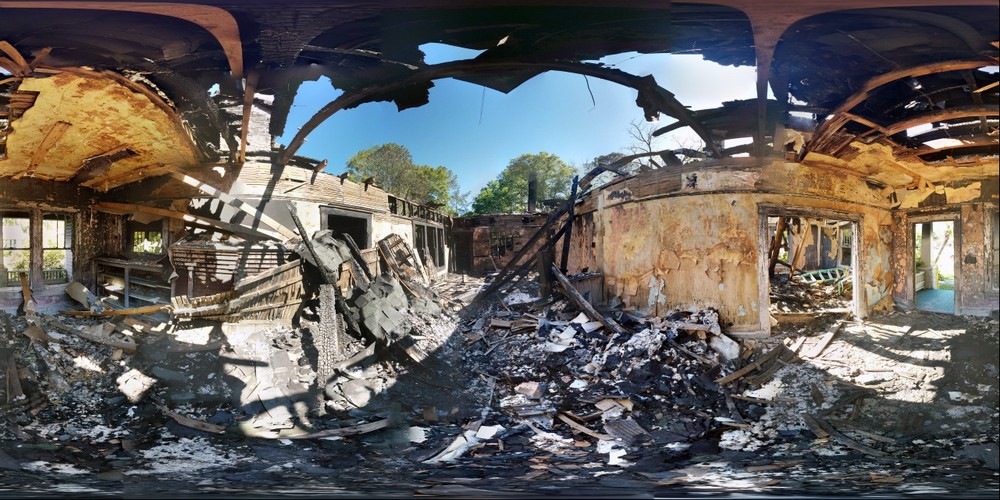
 Arson House, Waycross, GA
(see http://www.3d-360.com/153689 for spherical view) A fire set by two arsonists in December, 2013 of this abandoned house on a very rainy night destroyed the structure and killed a firefighter when the roof collapsed on him. The arsonists were identified and arrested two days later. This image was shot with a Nexus 5 using the photosphere app. It is a 360x180 equirectangular projected spherical image.
Uploaded Apr 22, 2014 by Jason Buchheim username:odyssey copyright 2014
10,240px by 5,120px, 0.05 Gigapixels
| Unmounted | Acrylic Museum Mount |
| Purchase Prints | Matte | Glossy | Lustre | Metalic | Deep Glossy | Deep Glossy |
| 12" x 24" | | | | | | |
VIEW OPTIONS please select the approximate angle of view of the image
Flat 1° 10° 45° 90° 170°
Sphere 45° 90° 180° 270° 360°
Odyssey Expeditions Panoram.io VR billboard style
 Okefenokee Swamp Sunset
A beautiful night in the Okefenokee Swamp, Georgia
Uploaded Sep 8, 2013 by Jason Buchheim username:odyssey copyright 2013
25,948px by 3,992px, 0.10 Gigapixels
| Unmounted | Acrylic Museum Mount |
| Purchase Prints | Matte | Glossy | Lustre | Metalic | Deep Glossy | Deep Glossy |
| 12" x 78" | | | | | | |
VIEW OPTIONS please select the approximate angle of view of the image
Flat 1° 10° 45° 90° 170°
Sphere 45° 90° 180° 270° 360°
Odyssey Expeditions Panoram.io VR billboard style
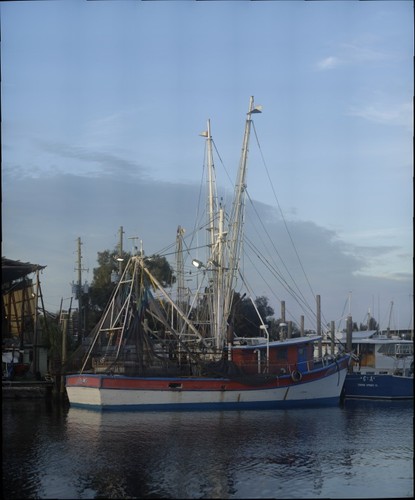 Tarpon Springs Shrimp Boat
Tarpon Springs is home to shrimp boats and sponge divers. The crew of this boat were preparing for a night of fishing.
This is protorapghed with the aid of the Gigapan Epic Pro robotic panoramic mount. Taken on my first day of beta testing this unit.
I used a 50-500mm Sigma lens on a Nikon D200. The lens was set at 300mm. The Gigapan unit was set to digitally fire the shutter (twice per frame, one for mirror lock up so that I could reduce movement, and one for taking the photo).
I am suprised to see the vingetting, I should try and correct that before sending the images to the stitcher.
The light was failing, so I opend up the lens as wide as it would go (f 6) and left the camera on manual focus and manual exposure. The depth of field is not large on a 300mm lens at f6.
I thought I had the rails on the unit level, but there is still some sawtooth on the edges so I really need to check that out better.
Uploaded Oct 28, 2009 by Jason Buchheim username:odyssey copyright 2009
18,882px by 22,757px, 0.43 Gigapixels
| Unmounted | Acrylic Museum Mount |
| Purchase Prints | Matte | Glossy | Lustre | Metalic | Deep Glossy | Deep Glossy |
| 12" x 10" | | | | | | |
| 18" x 15" | | | | | | |
| 24" x 20" | | | | | | |
| 30" x 25" | | | | | | |
| 36" x 30" | | | | | | |
VIEW OPTIONS please select the approximate angle of view of the image
Flat 1° 10° 45° 90° 170°
Sphere 45° 90° 180° 270° 360°
Odyssey Expeditions Panoram.io VR billboard style
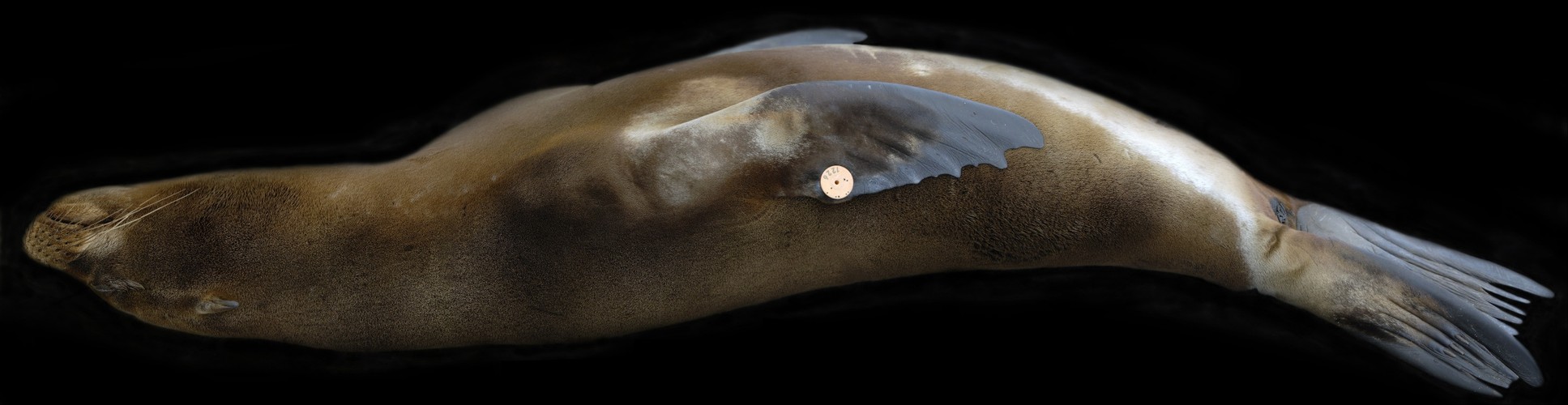 Galapagos Sea Lion Sleeping
Latin Name Zalophus wollebaeki
Conservation Status Vulnerable
Location Galapagos Islands
Colour Brown
Length 150 - 250 cms (59 - 98 inches)
Weight 50 - 400 Kgs (110 - 880 lbs)
Main Characteristics
Galapagos Sea Lions are one of the most conspicuous and numerous marine mammals on the Galapagos Islands. They have a body length between 150 and 250 cms (59 - 98 inches) and they weigh between 50 and 400 Kgs (110 - 880 lbs), males being much larger than females.
Males are coloured brown, females tend to be a lighter tan and juveniles are coloured chestnut brown. Their bodies are streamline and they have well developed fore flippers which they use to propel themselves through the water. They can control their hind flippers independently which enables them to move around more effectively on land.
When males reach puberty they begin to develop a raised forehead and sometimes their hair is lighter coloured on their crest.
Habitat
Galapagos Sea Lions are found on the islands of the Galapagos Archipelago. They spend a lot of their time swimming in the ocean but while on land they prefer sandy beaches and flat rocky areas that have plenty of shade and tidal pools. While at sea they will rarely venture further than 16 Kms (10 miles) from the coast.
Females gather in colonies of approximately 30 individuals and each colony is dominated by one bull. He will hold his territory for a short time before he is displaced by another bull. Bulls that are not dominating a colony will gather together in a bachelor group.
Diet
Galapagos Sea Lions mainly feed upon fish, squid, octopus and crustaceans.
Breeding
Galapagos Sea Lions breed between May and January and mating usually occurs in the water. Males hold their territories for 10 days - 3 months and during this time they aggressively defend it.
After a gestation period of approximately 11 months, females give birth to 1 pup. When the pups are born they weigh approximately 6 Kgs (13.2 lbs) and they are approximately 75 cms (29.5 inches) long. The pups are attended continuously by their mothers for 6 - 7 days after they are born, then the females have to go to sea to feed themselves, returning to their pups at night.
When the pups reach 1 - 2 weeks old they will venture into the water and start to learn how to swim. They are weaned when they reach 11 - 12 months old but because of the long breeding season and the length of time pups are cared for by their mothers, there are dependent pups on the rookeries all year round.
Predators
The main predators of Galapagos Sea Lions are sharks and killer whales. Dogs are also known to prey upon pups.
Interesting Facts
Galapagos Sea Lions are also known as:Pagos Sea Lion
Nikon D200 handheld 9 shots, stitched with PtGui. Brick floor carefully removed in Photoshop leaving a black background.
Uploaded Oct 15, 2009 by Jason Buchheim username:odyssey copyright 2009
18,459px by 4,771px, 0.09 Gigapixels
| Unmounted | Acrylic Museum Mount |
| Purchase Prints | Matte | Glossy | Lustre | Metalic | Deep Glossy | Deep Glossy |
| 12" x 46" | | | | | | |
VIEW OPTIONS please select the approximate angle of view of the image
Flat 1° 10° 45° 90° 170°
Sphere 45° 90° 180° 270° 360°
Odyssey Expeditions Panoram.io VR billboard style
 Moonlit Canyonlands National Park, Utah
On a mountain bike trip through the Canyonlands National Park in Utah on the White Rim road, we spent one of three nights at 'Murphys' plateau. I had to pee in the middle of the full moon night and decided to take this long exposure (30 seconds each) night shot of the desert (thats why its soo grainy- its moonlit)
Uploaded Apr 24, 2008 by Jason Buchheim username:odyssey copyright 2008
25,673px by 2,496px, 0.06 Gigapixels
| Unmounted | Acrylic Museum Mount |
| Purchase Prints | Matte | Glossy | Lustre | Metalic | Deep Glossy | Deep Glossy |
| 12" x 123" | | | | | | |
VIEW OPTIONS please select the approximate angle of view of the image
Flat 1° 10° 45° 90° 170°
Sphere 45° 90° 180° 270° 360°
Odyssey Expeditions Panoram.io VR billboard style
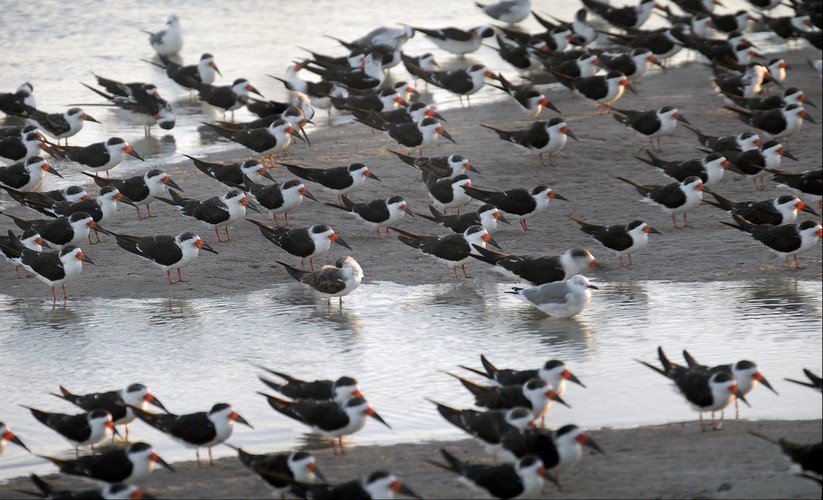 Black Skimmers, the endangered beach bird, Crystal River, Florida
Black Skimmers are unmistakable coastal seabirds renowned for their uniquely elongated lower beaks. They forage by flying incredibly low, plowing the water's surface to catch small fish. Found on sandy beaches and barrier islands, they are highly sensitive to human disturbance and nest directly in the sand.Distinctive FeaturesThe "Scissorbill": They are the only birds in North America with a lower mandible significantly longer than the upper one. The blade-like lower beak cuts through the water, snapping shut instantly upon contact with a fish.Cat-like Eyes: Unlike most birds, skimmers have vertical pupils that narrow to slits to protect their eyes from the intense glare of the sun and reflective water.Plumage: They have jet-black backs and caps, striking white underparts, and vibrant orange-red legs and bills (with a black tip).Feeding BehaviorTouch Foraging: Skimmers hunt by feel rather than sight. They glide just inches above calm tidal waters, skimming the surface with their lower beak to trigger a rapid bite when prey is encountered.Active Timing: They most actively forage at dawn, dusk, or even at night when waters are calmer and small fish are near the surface.Diet: They feed primarily on small fish (under 5 inches), as well as shrimp and small crustaceans.Habitat & BreedingColonial Nesters: They gather in large, dense colonies on flat, open, sandy beaches, shell bars, or barrier islands, often alongside terns.Nest in the Open: The nest is just a shallow scrape in the sand, where they lay clutches of 3 to 4 eggs.Nesting Season: In Florida and the broader Southeast, they breed primarily during the summer months.Conservation StatusBlack skimmers face ongoing population pressures and are listed as a State-designated Threatened species in Florida. Their habit of nesting directly on open sand makes them highly vulnerable to habitat loss, beach development, off-leash pets, vehicle traffic, and storm surges.If you are exploring the coastal beaches around Tarpon Springs, look out for flocks resting on the sandbars and always observe them from a safe distance so you don't disturb their nesting or feeding grounds.
Uploaded Jan 24, 2008 by Jason Buchheim username:odyssey copyright 2008
12,190px by 7,410px, 0.09 Gigapixels
| Unmounted | Acrylic Museum Mount |
| Purchase Prints | Matte | Glossy | Lustre | Metalic | Deep Glossy | Deep Glossy |
| 12" x 20" | | | | | | |
| 18" x 30" | | | | | | |
| 24" x 39" | | | | | | |
VIEW OPTIONS please select the approximate angle of view of the image
Flat 1° 10° 45° 90° 170°
Sphere 45° 90° 180° 270° 360°
Odyssey Expeditions Panoram.io VR billboard style
All images uploaded to and reside only at Gigapan®.com. Image copyrights by respective photographers.
This site does not copy or store any images and only provides the viewer KRPANO panorama viewing software, necessary configuration XML and proxy using the public Gigapan® API.