 Shore Birds on Anclotte Key, Florida
Skimmers and more
Uploaded Sep 28, 2016 by Jason Buchheim username:odyssey copyright
65,081px by 2,332px, 0.15 Gigapixels
| Unmounted | Acrylic Museum Mount |
| Purchase Prints | Matte | Glossy | Lustre | Metalic | Deep Glossy | Deep Glossy |
| 12" x 335" | | | | | | |
VIEW OPTIONS please select the approximate angle of view of the image
Flat 1° 10° 45° 90° 170°
Sphere 45° 90° 180° 270° 360°
Odyssey Expeditions Panoram.io VR billboard style
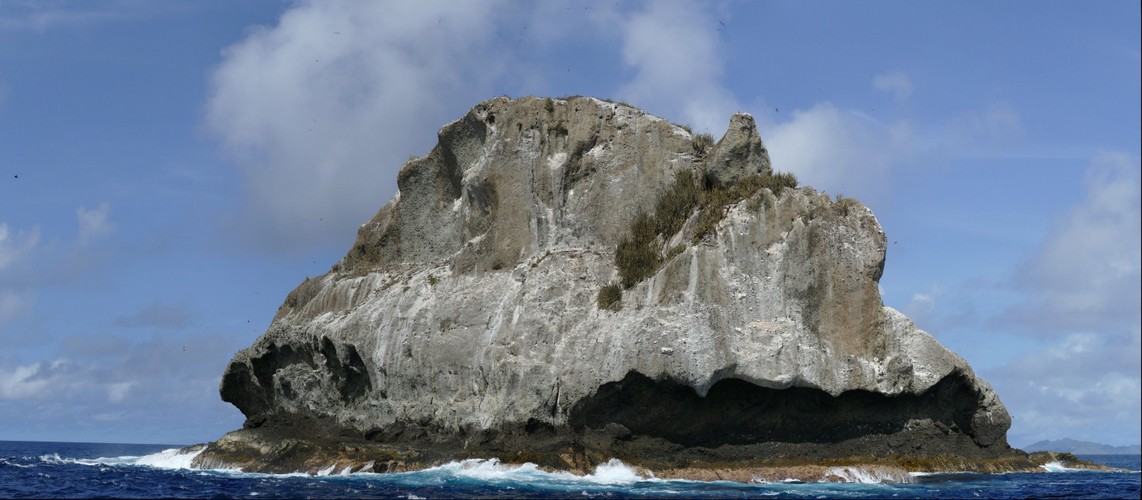 Sail Rock, Grenadines, Caribbean
Sail Rock, five miles east of the Tobogo Cays in St Vincent and the Grenadines, is a spectacular dive site and bird sanctuary. Check out the Brown Boobies and Magnificient Frigate birds here.
Uploaded Nov 5, 2015 by Jason Buchheim username:odyssey copyright
12,023px by 5,266px, 0.06 Gigapixels
| Unmounted | Acrylic Museum Mount |
| Purchase Prints | Matte | Glossy | Lustre | Metalic | Deep Glossy | Deep Glossy |
| 12" x 27" | | | | | | |
VIEW OPTIONS please select the approximate angle of view of the image
Flat 1° 10° 45° 90° 170°
Sphere 45° 90° 180° 270° 360°
Odyssey Expeditions Panoram.io VR billboard style
 beach birds, Howard Park, Florida
stereo-3d panorama
Uploaded Mar 2, 2015 by Jason Buchheim username:odyssey copyright 2012
50,116px by 4,752px, 0.24 Gigapixels
| Unmounted | Acrylic Museum Mount |
| Purchase Prints | Matte | Glossy | Lustre | Metalic | Deep Glossy | Deep Glossy |
| 12" x 127" | | | | | | |
VIEW OPTIONS please select the approximate angle of view of the image
Flat 1° 10° 45° 90° 170°
Sphere 45° 90° 180° 270° 360°
Odyssey Expeditions Panoram.io VR billboard style
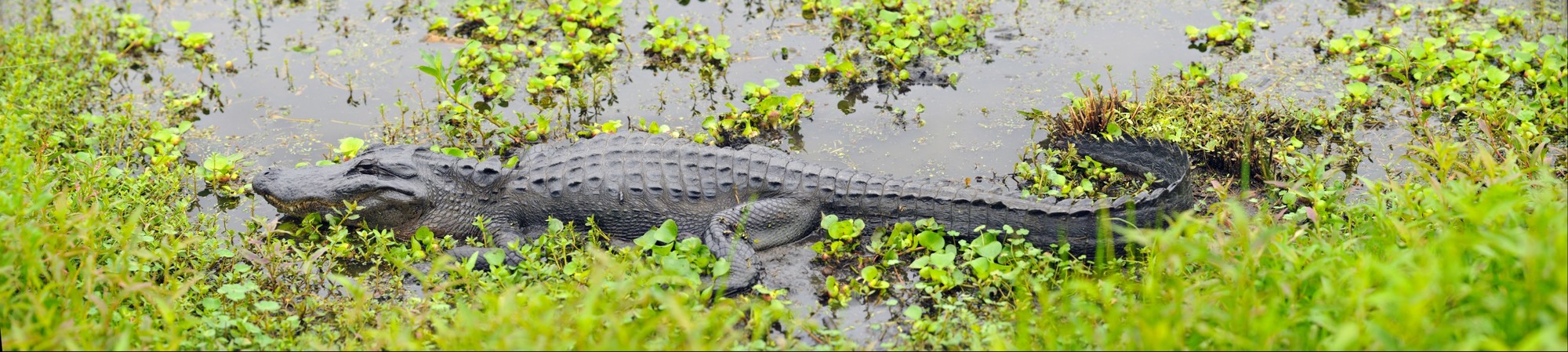 American Alligator in Paynes Prarie, Florida
The American alligator (Alligator mississippiensis) is one of North America's most ancient and successful predators — and Paynes Prairie Preserve State Park, just south of Gainesville, Florida, is one of the finest places on the continent to encounter one in the wild.
.
.
Paynes Prairie
This 21,000-acre basin prairie is a designated National Natural Landmark and one of Florida's most ecologically significant wild places. A shallow, sprawling wetland mosaic of wet prairie, marsh, hammock, and open water, it sits in a natural sinkhole basin whose water levels have risen and fallen dramatically over centuries. It supports an exceptional diversity of wildlife — bison, wild horses, sandhill cranes, and hundreds of bird species — but the alligator reigns here as the apex predator.
.
.
Ancient Lineage
American alligators are living relics of the Mesozoic, with a lineage stretching back more than 37 million years in essentially their current form. They survived whatever ended the dinosaurs and have changed remarkably little since. Encountering one on the boardwalks or trail edges of Paynes Prairie offers a genuine brush with deep evolutionary time.
The Animal Itself
Adult males at Paynes Prairie regularly exceed 10 feet and can approach 13 feet in length, weighing upwards of 500 pounds. Females are considerably smaller, typically reaching 8 to 9 feet. Their armor-like skin, called osteoderms, contains small bony plates beneath the scales that act as a kind of solar panel, absorbing heat directly into the bloodstream — an elegant solution for an ectotherm managing Florida's variable temperatures.
.
.
Behavior and Hunting
Alligators are ambush predators of remarkable patience, capable of remaining motionless for hours at the water's edge. They are opportunistic and will take fish, turtles, wading birds, snakes, and mammals. At Paynes Prairie, they are frequently observed along the La Chua Trail corridor, basking on the levee banks or gliding silently through the shallow marsh. Their bite force is among the strongest of any living animal — measured at over 2,900 pounds per square inch — but their mouths open with surprisingly little force, which is why hatchlings can be held shut with a single hand.
.
.
Bellowing and Breeding
Spring at Paynes Prairie brings one of nature's more primal spectacles. Males bellow deeply — a resonant, infrasonic rumble that vibrates the water surface into a dancing mist called the "water dance" — to establish territory and attract females. Females build large mound nests of vegetation, and the heat of decomposition incubates the eggs. Nest temperature during a critical period actually determines the sex of the hatchlings — a phenomenon called temperature-dependent sex determination.
.
.
Conservation Comeback
Once hunted nearly to extinction for their hides and listed as endangered in 1967, American alligators rebounded so successfully under federal protection that they were removed from the endangered list by 1987 — one of the Endangered Species Act's earliest and most celebrated conservation successes. Florida today is home to an estimated 1.3 million alligators. Paynes Prairie's healthy, visible population is a direct testament to what protected habitat and legal safeguards can accomplish.
Uploaded Apr 25, 2013 by Jason Buchheim username:odyssey copyright 2013
20,564px by 4,615px, 0.09 Gigapixels
| Unmounted | Acrylic Museum Mount |
| Purchase Prints | Matte | Glossy | Lustre | Metalic | Deep Glossy | Deep Glossy |
| 12" x 53" | | | | | | |
VIEW OPTIONS please select the approximate angle of view of the image
Flat 1° 10° 45° 90° 170°
Sphere 45° 90° 180° 270° 360°
Odyssey Expeditions Panoram.io VR billboard style
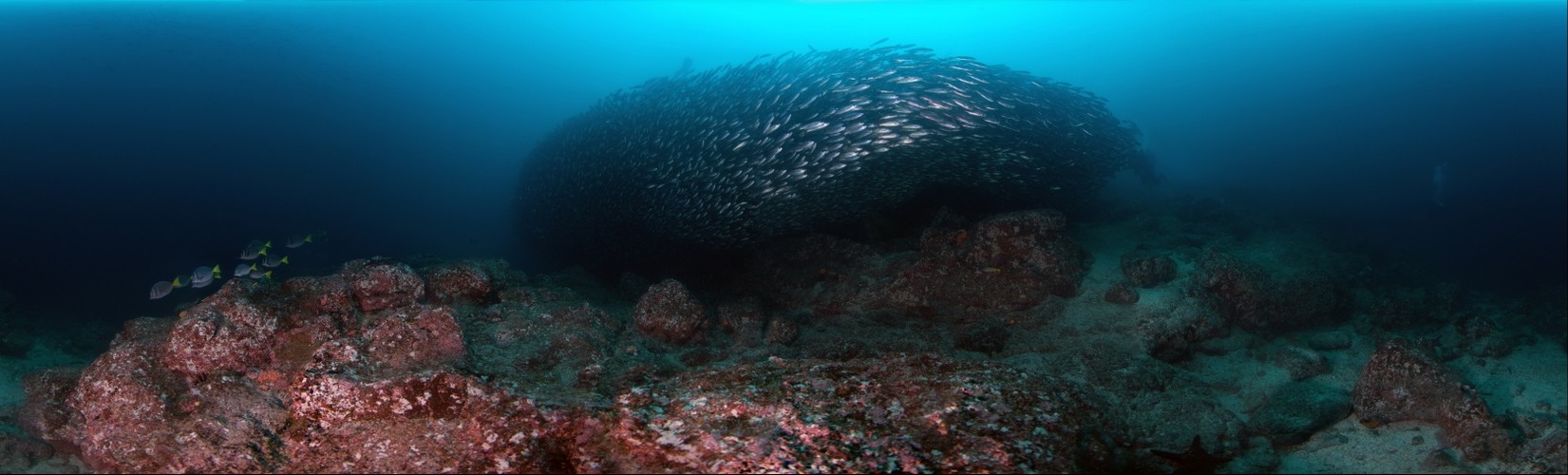 Galapagos Bait Ball of Salema Fish
A huge school of Salema fish avoid predation by aggregating into a ball.
By Odyssey Expeditions Tropical Marine Biology Voyages program director Jason Buchheim. Please visit http://www.odysseyexpeditions.com for more information on our unique educational adventure voyages for teenagers and college students.
D200, 10 photos with 15mm lens for full 360.
This is best viewed in a Virtual Reality 360 degree viewer here: http://www.3dpan.org/34815
A view from INSIDE the bait ball can be found here: http://gigapan.org/gigapans/34662/ or in Virtual Reality viewer here http://www.3dpan.org/34662
Salema fish can actually be hallucinogenic to eat! Known as 'dream fish', the herbivorous fish have toxins in their flesh from the algae that they eat that when ingested by humans produce severe auditory and visual hallucinations. No, I did not try it. It was spooky enough inside the baitball.
Definition of 'Bait Ball': Schools of small fish cruise near the ocean's surface, feeding on plankton and other organic foodstuff. This schooling behavior evolved as a means of protection. If a shark or other predator approaches, the group parts in unison - making it difficult for the invader to target any individual. As a result, this type of attack often fails. Group hunting changes the odds. In a baitball feeding frenzy, a hunting party may consist of bottlenose dolphins, silky sharks, yellowfin tuna, rainbow runners, wahoo, marlin, jacks and even booby birds. They work in a cooperative effort to ensure a feast for all. A typical main course features teeming schools of juvenile jacks and chubs. When a lone predator, usually a shark or dolphin, discovers one of these floating smorgasbords and attacks, a number of events are set into action. Frightened fish elicit a unique odor and other sharks in the area rush to the scene. The fleeing fish then intensify their frantic swimming patterns, alerting even more nearby predators. Now, each member of the murderous team begins to execute its role. The silky sharks and bottlenose dolphins, which are usually mortal enemies, start to surround the school. Gradually, they increase speed and narrow their path, trapping the fish in a tight ball against the surface. Next tuna and marlin rip through the center of the ball, further disorientating the confused prey. Many of the injured bait fish quickly tire and are easily eaten. A full-blown baitball feeding frenzy leaves few survivors. As predators become satiated, new enlistees arrive to continue the slaughter. Against the odds, small groups of baitfish may escape. They will continue to cruise pelagic waters, eating as much as they can as quickly as they can. Once again, the rule of the ocean is clear and simple: get as big as you can before you get eaten.
Please visit http://www.3dpan.org to explore Three Dimensional Stereo panoramas!
Uploaded Oct 15, 2009 by Jason Buchheim username:odyssey copyright 2009
13,396px by 4,056px, 0.05 Gigapixels
| Unmounted | Acrylic Museum Mount |
| Purchase Prints | Matte | Glossy | Lustre | Metalic | Deep Glossy | Deep Glossy |
| 12" x 40" | | | | | | |
VIEW OPTIONS please select the approximate angle of view of the image
Flat 1° 10° 45° 90° 170°
Sphere 45° 90° 180° 270° 360°
Odyssey Expeditions Panoram.io VR billboard style
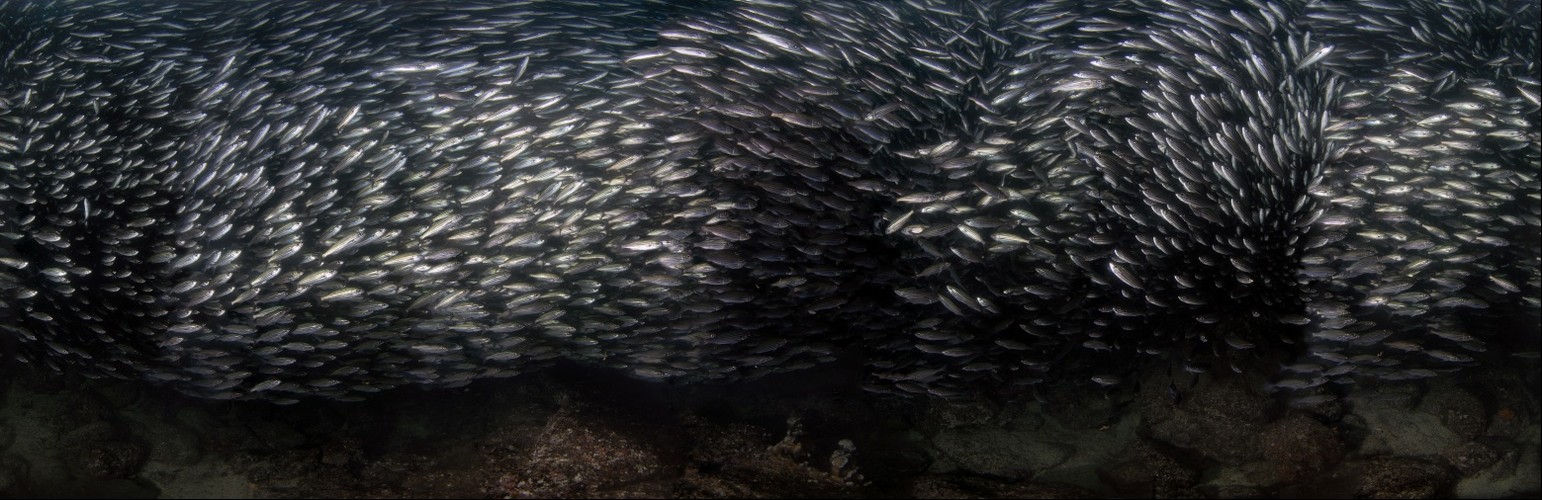 Inside a Galapagos Bait Ball of Black Stripped Salema Fish - 360 degree underwater panorama
On the inside of a 'bait ball' of salema fish off Isabella Island, Galapagos. This is 9 photos taken with a 15mm lens, stiched with PtGui and a lot of photoshop work post processing to try to have each fish complete. This experience is being completely engulfed and surrounded on all sides and above by millions of fish. It darkens the sky! Looks pretty cool in Googleearth. Taken with a housed Nikon D200 with the new Underwater Gigapan Mount (not)! Actually taken with a monopod underwater, rotating the camera lens through its nodal point underwater is challenging and fun. Salema fish can actually be hallucinogenic to eat! Known as 'dream fish', the herbivorous fish have toxins in their flesh from the algae that they eat that when ingested by humans produce severe auditory and visual hallucinations. No, I did not try it. It was spooky enough inside the baitball.
Definition of 'Bait Ball': Schools of small fish cruise near the ocean's surface, feeding on plankton and other organic foodstuff. This schooling behavior evolved as a means of protection. If a shark or other predator approaches, the group parts in unison - making it difficult for the invader to target any individual. As a result, this type of attack often fails. Group hunting changes the odds. In a baitball feeding frenzy, a hunting party may consist of bottlenose dolphins, silky sharks, yellowfin tuna, rainbow runners, wahoo, marlin, jacks and even booby birds. They work in a cooperative effort to ensure a feast for all. A typical main course features teeming schools of juvenile jacks and chubs. When a lone predator, usually a shark or dolphin, discovers one of these floating smorgasbords and attacks, a number of events are set into action. Frightened fish elicit a unique odor and other sharks in the area rush to the scene. The fleeing fish then intensify their frantic swimming patterns, alerting even more nearby predators. Now, each member of the murderous team begins to execute its role. The silky sharks and bottlenose dolphins, which are usually mortal enemies, start to surround the school. Gradually, they increase speed and narrow their path, trapping the fish in a tight ball against the surface. Next tuna and marlin rip through the center of the ball, further disorientating the confused prey. Many of the injured bait fish quickly tire and are easily eaten. A full-blown baitball feeding frenzy leaves few survivors. As predators become satiated, new enlistees arrive to continue the slaughter. Against the odds, small groups of baitfish may escape. They will continue to cruise pelagic waters, eating as much as they can as quickly as they can. Once again, the rule of the ocean is clear and simple: get as big as you can before you get eaten.
Uploaded Oct 14, 2009 by Jason Buchheim username:odyssey copyright 2009
12,463px by 4,040px, 0.05 Gigapixels
| Unmounted | Acrylic Museum Mount |
| Purchase Prints | Matte | Glossy | Lustre | Metalic | Deep Glossy | Deep Glossy |
| 12" x 37" | | | | | | |
VIEW OPTIONS please select the approximate angle of view of the image
Flat 1° 10° 45° 90° 170°
Sphere 45° 90° 180° 270° 360°
Odyssey Expeditions Panoram.io VR billboard style
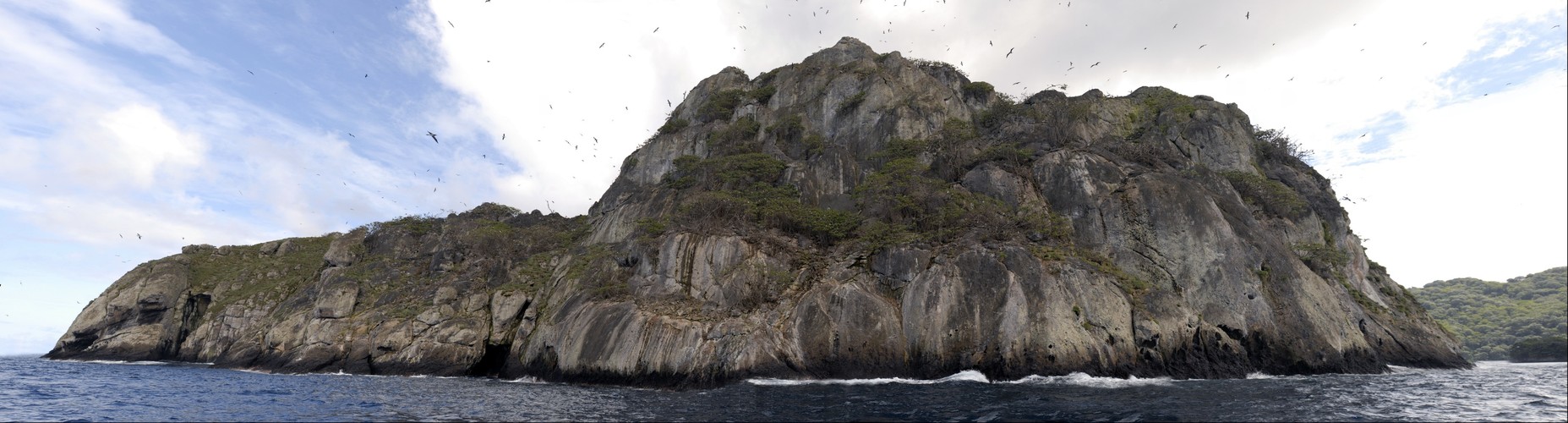 manjuanita Island, Cocos, Costa Rica
Booby birds nest on Manjuanita Island. The frigate birds are obligate parasites, which means they only know how to steal their meals from other birds, not how to catch it on their own.
Uploaded Apr 24, 2008 by Jason Buchheim username:odyssey copyright 2008
23,734px by 6,399px, 0.15 Gigapixels
| Unmounted | Acrylic Museum Mount |
| Purchase Prints | Matte | Glossy | Lustre | Metalic | Deep Glossy | Deep Glossy |
| 12" x 45" | | | | | | |
| 18" x 67" | | | | | | |
VIEW OPTIONS please select the approximate angle of view of the image
Flat 1° 10° 45° 90° 170°
Sphere 45° 90° 180° 270° 360°
Odyssey Expeditions Panoram.io VR billboard style
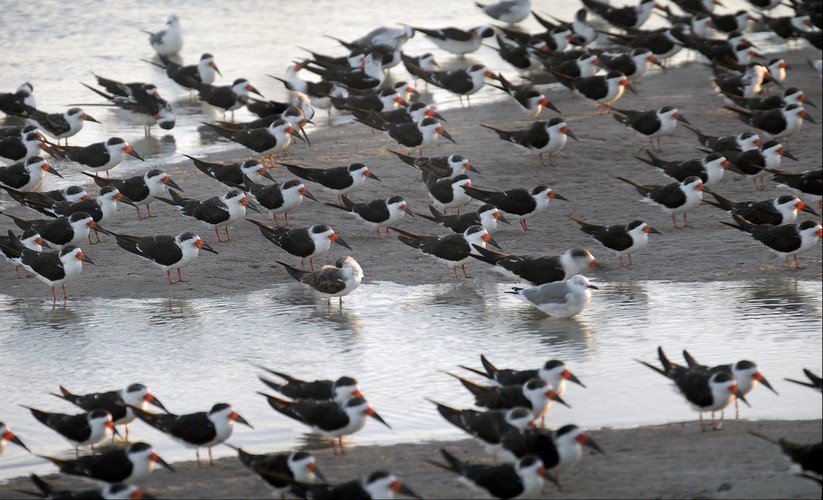 Black Skimmers, the endangered beach bird, Crystal River, Florida
Black Skimmers are unmistakable coastal seabirds renowned for their uniquely elongated lower beaks. They forage by flying incredibly low, plowing the water's surface to catch small fish. Found on sandy beaches and barrier islands, they are highly sensitive to human disturbance and nest directly in the sand.Distinctive FeaturesThe "Scissorbill": They are the only birds in North America with a lower mandible significantly longer than the upper one. The blade-like lower beak cuts through the water, snapping shut instantly upon contact with a fish.Cat-like Eyes: Unlike most birds, skimmers have vertical pupils that narrow to slits to protect their eyes from the intense glare of the sun and reflective water.Plumage: They have jet-black backs and caps, striking white underparts, and vibrant orange-red legs and bills (with a black tip).Feeding BehaviorTouch Foraging: Skimmers hunt by feel rather than sight. They glide just inches above calm tidal waters, skimming the surface with their lower beak to trigger a rapid bite when prey is encountered.Active Timing: They most actively forage at dawn, dusk, or even at night when waters are calmer and small fish are near the surface.Diet: They feed primarily on small fish (under 5 inches), as well as shrimp and small crustaceans.Habitat & BreedingColonial Nesters: They gather in large, dense colonies on flat, open, sandy beaches, shell bars, or barrier islands, often alongside terns.Nest in the Open: The nest is just a shallow scrape in the sand, where they lay clutches of 3 to 4 eggs.Nesting Season: In Florida and the broader Southeast, they breed primarily during the summer months.Conservation StatusBlack skimmers face ongoing population pressures and are listed as a State-designated Threatened species in Florida. Their habit of nesting directly on open sand makes them highly vulnerable to habitat loss, beach development, off-leash pets, vehicle traffic, and storm surges.If you are exploring the coastal beaches around Tarpon Springs, look out for flocks resting on the sandbars and always observe them from a safe distance so you don't disturb their nesting or feeding grounds.
Uploaded Jan 24, 2008 by Jason Buchheim username:odyssey copyright 2008
12,190px by 7,410px, 0.09 Gigapixels
| Unmounted | Acrylic Museum Mount |
| Purchase Prints | Matte | Glossy | Lustre | Metalic | Deep Glossy | Deep Glossy |
| 12" x 20" | | | | | | |
| 18" x 30" | | | | | | |
| 24" x 39" | | | | | | |
VIEW OPTIONS please select the approximate angle of view of the image
Flat 1° 10° 45° 90° 170°
Sphere 45° 90° 180° 270° 360°
Odyssey Expeditions Panoram.io VR billboard style
All images uploaded to and reside only at Gigapan®.com. Image copyrights by respective photographers.
This site does not copy or store any images and only provides the viewer KRPANO panorama viewing software, necessary configuration XML and proxy using the public Gigapan® API.